
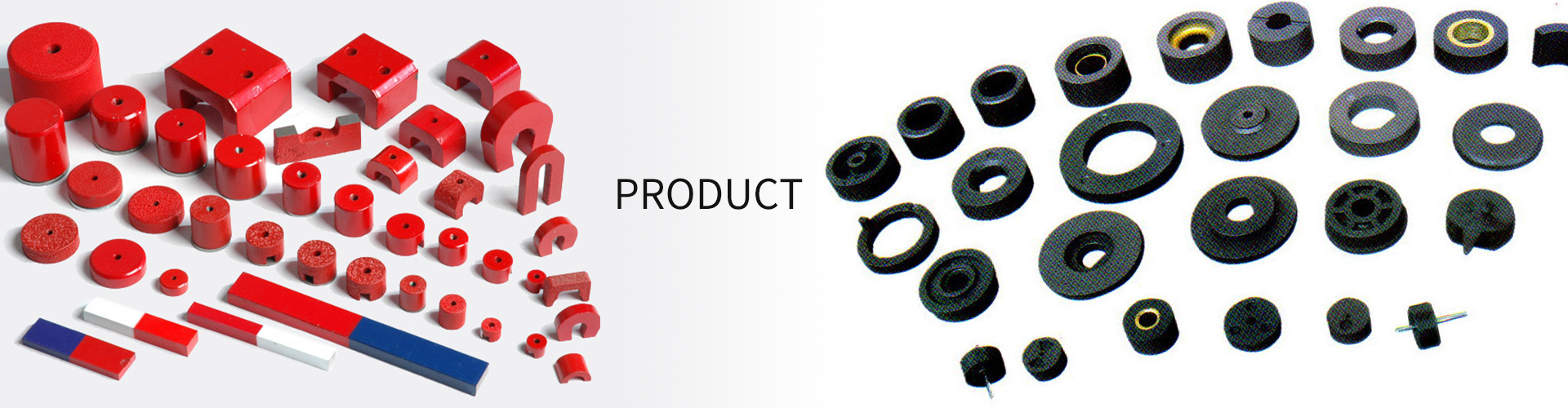
Power series microwave ferrite materials
Power series microwave ferrite materials
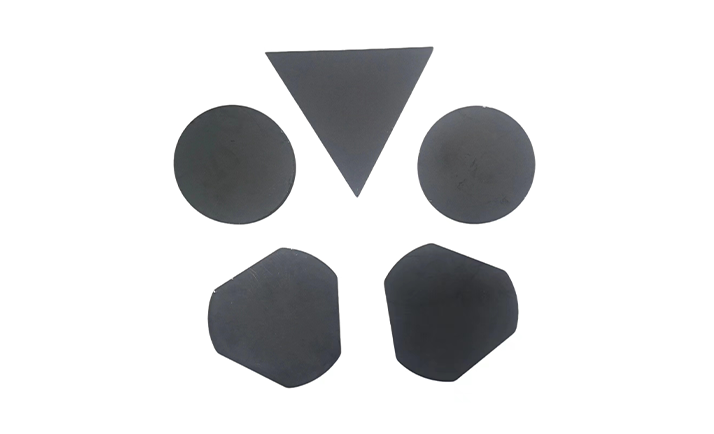
Power Microwave Ferrites: Enabling Next-Generation High-Frequency, High-Power Applications
Power Microwave Ferrites are specialized ceramic materials engineered to operate efficiently under high-power conditions while maintaining excellent magnetic properties and thermal stability. These advanced materials are indispensable in modern telecommunications, aerospace, and defense systems, where they enable the development of reliable, high-performance devices like circulators, isolators, and phase shifters . At Xiamen Jingxin Imp. & Exp. Co., Ltd, we combine decades of material science expertise with cutting-edge manufacturing to deliver power microwave ferrites that meet the rigorous demands of today's most challenging applications, including 5G/6G infrastructure, radar systems, and satellite communications .
1. Key Performance Advantages of Our Power Microwave Ferrites
Our power microwave ferrites are designed to provide exceptional performance under demanding operational conditions:
High-Power Handling Capability: Engineered to withstand significant power levels without performance degradation, thanks to optimized compositions that enhance power thresholds and minimize losses .
Excellent Thermal Stability: Formulations featuring Gd³⁺ substitutions ensure stable magnetic properties across wide temperature ranges, typically from -40°C to over 100°C, with some specialized grades extending even further .
Low Loss Characteristics: Precise control of composition and microstructure results in narrow ferromagnetic resonance linewidths (ΔH) and reduced dielectric losses, crucial for maintaining efficiency in high-frequency applications .
Tailored Magnetic Properties: Through strategic ion substitutions, we can precisely adjust key parameters like saturation magnetization (4πMs) to meet specific application requirements across different frequency bands .
2. Material Systems and Technical Specifications
We offer a comprehensive range of power microwave ferrite materials, each optimized for specific performance characteristics and application scenarios:
2.1. Garnet-Type Ferrites
Garnet-structured ferrites, particularly yttrium iron garnet (YIG) and its modified derivatives, provide an outstanding balance of low loss and high stability . Our advanced garnet formulations include:
YCaVIG (Yttrium Calcium Vanadium Iron Garnet): Offers lower 4πMs with high Curie temperature and narrow linewidth compared to pure YIG .
YGdCaVInIG Composite Garnets: Combines the benefits of multiple ion substitutions to achieve superior temperature stability while maintaining low losses .
YGdCaSnIG Microwave Garnet: Delivers high power capability with excellent temperature stability across -40°C to 100°C, with saturation magnetization of approximately 943 Gs .
2.2. Spinel-Type Ferrites
Spinel ferrites (such as Ni-Zn and Li-based systems) provide versatile magnetic properties suitable for various frequency ranges :
Ni-Zn Ferrites: Demonstrate excellent microwave absorption properties with high saturation magnetization, making them valuable for both absorption and power applications .
Lithium-Based Spinels: Offer good power handling capabilities with adjustable magnetic properties through appropriate doping strategies.
Table: Typical Parameters of Power Microwave Ferrites by Material Type
| Material Type | 4πMs (Gauss) | ΔH (Oe) | Tc (°C) | εr | Best Application |
|---|---|---|---|---|---|
| Garnet (YIG-based) | 200-5000 | 10-35 | 250-300 | 14-30 | Low-loss devices, Satellite comm |
| Spinel (Ni-Zn) | 300-800 | 15-100 | 317-600 | 12-16 | 5G components, Absorption |
| Hexagonal (M-type) | 200-5000 | 100-500 | 450-600 | 15-20 | Millimeter-wave devices |
3. Critical Applications in Modern Technology
Our power microwave ferrites enable breakthrough performance across multiple high-tech sectors:
5G/6G Communications Infrastructure: Circulators and isolators in base stations that must handle high power levels while maintaining signal integrity and efficiency .
Aerospace and Defense Systems: Radar systems, electronic warfare equipment, and satellite communications hardware requiring reliable operation in extreme environments .
Satellite Communications: Payload components including switches, circulators, and filters that experience wide thermal variations in space applications .
Scientific and Medical Instruments: MRI systems, particle accelerators, and research equipment requiring precise magnetic field control and stability.
4. Material Design and Manufacturing Excellence
Our approach to power microwave ferrite development combines sophisticated material design with precision manufacturing:
4.1. Advanced Composition Design
Strategic Ion Substitutions: Incorporating specific ions like Gd³⁺, In³⁺, Sn⁴+, and Ca²⁺ to optimize temperature stability, reduce losses, and tailor magnetic properties .
Deficit Stoichiometry Control: Implementing precise iron-deficient formulations (typically 2-5% deficit) to minimize Fe²⁺ formation and reduce dielectric losses .
Multi-Ion Systems: Developing complex compositions like YGdCaVInIG that leverage synergistic effects between different substituents .
4.2. Precision Manufacturing Processes
Oxide Ceramic Processing: Utilizing conventional ceramic processing with rigorous control over each manufacturing stage to ensure consistent performance .
High-Temperature Sintering: Employing optimized sintering profiles (typically 1345°C-1370°C) in controlled atmospheres to achieve near-theoretical density .
Microstructural Control: Implementing grinding, polishing, and surface treatment processes to minimize surface-related losses and enhance performance .
5. Technical Comparison with Conventional Ferrites
Power microwave ferrites offer significant advantages over standard materials for demanding applications:
Table: Performance Comparison: Power vs. Conventional Microwave Ferrites
| Parameter | Power Microwave Ferrites | Conventional Ferrites | Advantage Impact |
|---|---|---|---|
| Power Handling | 30-50% higher | Baseline | Reduced thermal runaway risk |
| Temperature Range | -40°C to >100°C | -40°C to 80°C | Wider operational range |
| Ms Stability (ΔMs/Ms) | <5% (across range) | 15-25% variation | Consistent device performance |
| High-Power Losses | Significantly reduced | Higher | Improved efficiency |
6. Selection Guide for Optimal Performance
Choosing the appropriate power microwave ferrite requires careful consideration of application requirements:
Frequency of Operation: Different material systems perform optimally at specific frequency bands:
Power Requirements: Higher power applications benefit from materials with higher Curie temperatures and optimized compositions for power handling .
Temperature Range: Consider both ambient conditions and self-heating effects when selecting materials .
Device Size Constraints: Higher dielectric constant materials enable more compact designs .
Frequently Asked Questions (FAQ)
Q: What makes power microwave ferrites different from standard microwave ferrites?
A: Power microwave ferrites are specifically engineered with enhanced power handling capabilities, superior thermal stability, and optimized compositions to perform reliably under high-power conditions where standard materials would degrade or fail .
Q: How does Curie temperature affect high-power performance?
A: The Curie temperature (Tc) determines the maximum operating temperature before a ferrite loses its magnetic properties. In high-power applications, internal heating can be significant, making high-Tc materials essential for maintaining performance .
Q: Can you customize ferrite parameters for specific applications?
A: Yes, absolutely. Through precise composition control and doping strategies, we can tailor key parameters including saturation magnetization (4πMs), ferromagnetic resonance linewidth (ΔH), and temperature stability to optimize performance for your specific application .
Q: What are the key considerations for selecting power ferrites in 5G applications?
A: For 5G applications, critical factors include operating frequency band, power handling requirements, temperature stability across the operational range, and minimal intermodulation effects to maintain signal quality .
Typical technical indicators and foreign reference brands
| TYPES | SATURATION MAGNETIZATION 4πMs (Gauss) ±5% | CURIE TEMPERATURE Tc °C | LINE WIDTH ΔH (Oe) | SPIN WAVE LINE WIDTH ΔHk (Oe) ±20% | DIELECTRIC CONSTANT ε’ ±5% | DIELECTRIC LOSS TANGENT tanδ |
| 155P | 1950 | 250 | ≤40 | 12.0 | 14.0 | ≤0.0002 |
| 143P | 1800 | 255 | ≤35 | 4.0 | 14.4 | ≤0.0002 |
| 127P | 1600 | 265 | ≤35 | 5.0 | 14.3 | ≤0.0002 |
| 14H | 1400 | 255 | ≤45 | 6.0 | 13.8 | ≤0.0002 |
| 12H | 1200 | 260 | ≤50 | 7.0 | 13.7 | ≤0.0002 |
| 80P | 1000 | 240 | ≤50 | 7.2 | 13.6 | ≤0.0002 |
| 8HA | 850 | 235 | ≤50 | 8.5 | 13.4 | ≤0.0002 |
| 68P | 850 | 235 | ≤60 | 10 | 14.0 | ≤0.0002 |
| 10HA11 | 1000 | 235 | ≤40 | 6.0 | 13.6 | ≤0.0002 |
| 8HA11 | 800 | 220 | ≤40 | 8.0 | 13.4 | ≤0.0002 |
| 6HA11 | 600 | 200 | ≤40 | 10.0 | 13.2 | ≤0.0002 |
| 4HA11 | 440 | 190 | ≤45 | 9.0 | 13.2 | ≤0.0002 |
| 3HA11 | 300 | 150 | ≤55 | 10.0 | 13.0 | ≤0.0002 |
| 2HA14 | 200 | 140 | ≤65 | 8.0 | 13.0 | ≤0.0002 |