
Bonded magenet
Bonded magenet
Bonded Magnets: Precision-Engineered Solutions for Complex Magnetic Assemblies
What are Bonded Magnets?
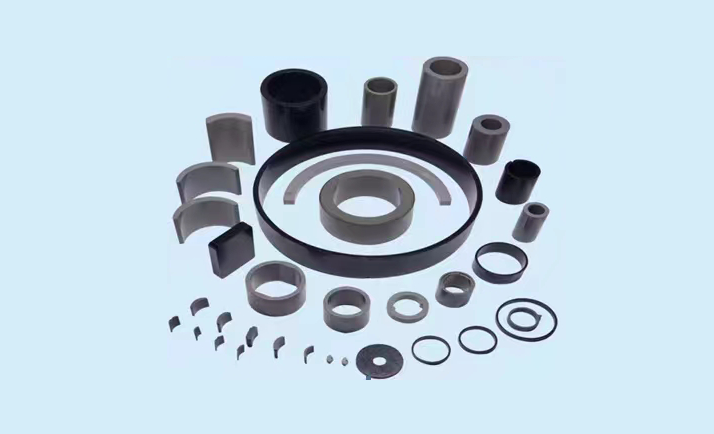
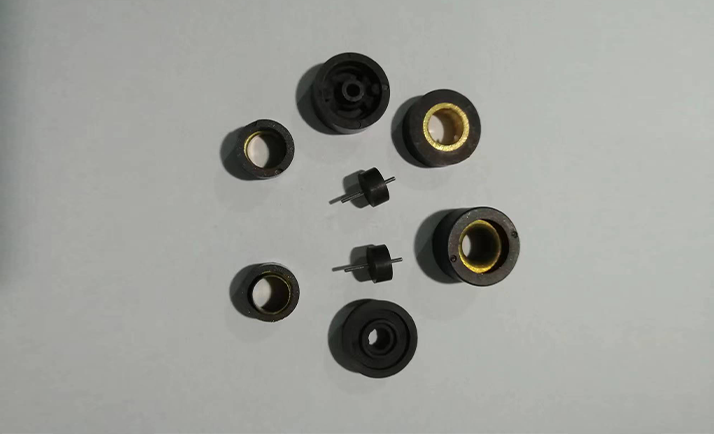
Bonded magnets are composite materials formed by blending magnetic powders (NdFeB, Ferrite, SmCo, Alnico) with polymer binders (epoxy, nylon, rubber) and solidifying them through specialized molding processes. These magnets deliver unique advantages over sintered alternatives:
Dimensional Accuracy: ±0.05mm tolerance for net-shape manufacturing
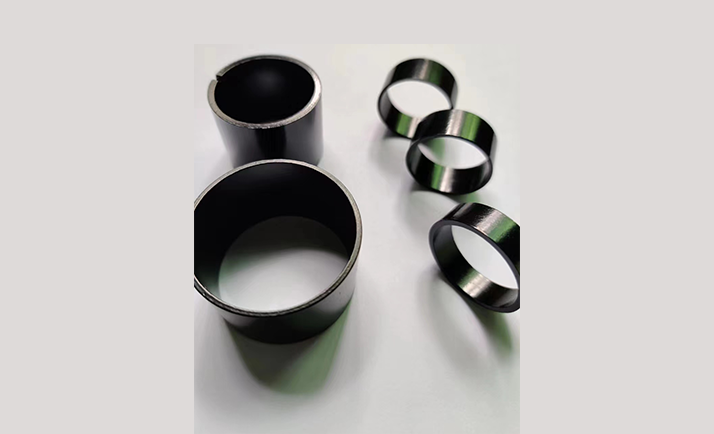
Complex Geometry: Thin-walled rings, multi-pole structures & 3D shapes
Enhanced Durability: High impact resistance with minimal chipping/cracking
Global bonded magnet market reached $10B in 2023 (28% of permanent magnet share), driven by EV and consumer electronics demand.
Five Strategic Advantages for High-Volume Applications
1. Unmatched Design Freedom
◦ Injection Molding: 200+ complex shapes (gears, sensor hubs)
◦ Compression Bonding: 7-10 t/cm² pressure for highest magnetic loading
2. Superior Mechanical Properties
◦ Flexible Magnets (Calendering): 0.3-6mm thickness, roll-to-roll production
◦ Rigid Magnets (Extrusion): Thin washers & tall rings with 20% binder
3. Material Versatility
◦ Bonded NdFeB: (BH)max = 64-96 kJ/m³ using melt-spun powder
◦ Bonded Ferrite: Cost-effective option at $0.02-0.15/pc
◦ Hybrid Systems: Ferrite + NdFeB composites for optimized performance
4. Production Efficiency
◦ Fast Cycling: 48-hour prototype service available
◦ Zero Waste: 99% material utilization vs. 60% in machining
5. Quality Assurance
◦ ISO 17025 certified with Cpk ≥1.67 process control
◦ RoHS/REACH compliance for global exports
Bonded vs. Sintered Magnets: Selection Guide
| Parameter | Bonded Magnets | Sintered Magnets |
| Dimensional Tolerance | ±0.05mm | ±0.3mm |
| Maximum (BH)max | 96 kJ/m³ | 400 kJ/m³ |
| Corrosion Resistance | Intrinsic | Requires Coating |
| Complex Shapes | Excellent | Limited |
| Production Speed | Seconds | Hours |
Dominating 70%+ Precision Magnet Applications
1. Electronics & IT
• HDD spindle motors (2B+ units annually)
• CD-ROM/FDD stepper motors with 6-8 pole magnetization
2. Automotive Systems
• ABS wheel speed sensors (30+ magnets per vehicle)
• EV battery management current sensors
3. Industrial Automation
• Encoder rings with 64-128 poles (±1° accuracy)
• Magnetic coupling for chemical pumps
4. Consumer Goods
• Smartphone vibration motors
• Appliance sensors (washing machine, AC)
Manufacturing Process Comparison
| Process | Binder Content | (BH)max Range | Best For |
| Compression | 2-3 wt% | 8-12 MGOe | High-performance motors |
| Injection | 20-30 vol% | 2-5 MGOe | Complex housings |
FAQ Section:
Q: How to achieve 64-pole magnetization in bonded rings?
A: Our pulse magnetizers deliver 25kOe field strength for high-resolution patterning.
Q: Can bonded magnets withstand 150°C continuous operation?
A: Yes! Our thermoset epoxy grades maintain performance at 180°C.
Other Magnetic Properties of Bonded Magnets:
Resiverble Permeabilityur | Recoil Temperature coefficient of Br (%/°C) | Density(g/cm3) | |
Compression NdFeB | 1.1 – 1.22 | -0.09 – -0.10 | 5.2 – 6.4 |
Compression SmCo | 1.05 | -0.03 | 6.4 – 7.2 |
Injection NdFeB | 1.1 – 1.22 | -0.09 – -0.10 | 4.0 – 5.5 |
Injection SmCo | 1.05 – 1.01 | -0.04 | 3.0 – 5.8 |
Injection Ferrite | 0.18 – 0.2 | 3.3 – 3.8 |
Magnetic properties of Bonded Magnets:
Item | Grade | Br (kGs) | Hcb (kOe) | Hcj (kOe) | (BH)max (MGOe) | Density (g/cm3) |
Compression NdFeB | NFZ-2 | 2.8 – 3.6 | 2.0 – 4.0 | 3.0 – 6.0 | 2.0 – 2.5 | 4.5 – 5.0 |
NFZ-3 | 3.0 – 4.0 | 3.0 – 4.0 | 4.0 – 8.0 | 2.6 – 3.5 | 4.5 – 5.5 | |
NFZ-4 | 3.5 – 4.5 | 3.0 – 4.0 | 7.0 – 8.5 | 3.5 – 4.5 | 4.5 – 5.5 | |
NFZ-5 | 4.6 – 5.5 | 3.5 – 4.0 | 7.5 – 9.0 | 4.6 – 5.5 | 5.0 – 5.6 | |
NFZ-6 | 5.6 – 6.0 | 3.8 – 4.2 | 7.0 – 9.0 | 5.6 – 6.5 | 5.6 – 6.1 | |
NFZ-7 | 6.0 – 6.3 | 4.2 – 5.0 | 7.0 – 10.0 | 6.6 – 7.5 | 5.6 – 6.1 | |
NFZ-8 | 6.0 – 6.5 | 4.8 – 5.4 | 8.0 – 10.0 | 7.6 – 8.5 | 5.7 – 6.1 | |
NFZ-9 | 6.6 – 7.0 | 5.1 – 5.6 | 8.0 – 10.0 | 8.6 – 9.5 | 5.8 – 6.2 | |
NFZ-10 | 6.8 – 7.3 | 5.2 – 5.8 | 8.0 – 10.0 | 9.6 – 10.5 | 5.8 – 6.2 | |
NFZ-11L | 7.6 – 8.0 | 5.0 – 6.0 | 6.0 – 8.0 | 11.0 – 12.0 | 5.8 – 6.2 | |
NFZ-12 | 7.1 – 7.5 | 5.5 – 5.9 | 8.0 – 10.0 | 10.6 – 12.0 | 6.0 – 6.2 | |
NFZ-7M | 5.9 – 6.3 | 4.6 – 4.9 | 10.0 – 14.0 | 6.6 – 7.5 | 5.7 – 6.1 | |
NFZ-8M | 6.2 – 6.8 | 4.9 – 5.5 | 10.0 – 14.0 | 7.6 – 8.5 | 5.7 – 6.1 | |
NFZ-9M | 6.6 – 7.0 | 5.1 – 5.6 | 10.0 – 15.0 | 9.0 – 10.0 | 5.7 – 6.1 | |
Compression SmCo | SCZ-4 | 3.8 – 4.2 | 2.5 – 3.5 | 8.5 – 13.0 | 3.5 – 4.5 | 6.4 – 7.0 |
SCZ-5 | 4.1 – 5.4 | 3.2 – 4.5 | 9.0 – 15.0 | 4.6 – 5.5 | 6.5 – 7.0 | |
SCZ-6 | 5.0 – 5.5 | 3.7 – 4.6 | 8.0 – 15.0 | 5.6 – 6.5 | 6.5 – 7.0 | |
SCZ-7 | 5.5 – 6.0 | 3.8 – 4.9 | 8.0 – 15.0 | 6.6 – 7.5 | 6.5 – 7.0 | |
SCZ-8 | 5.8 – 6.4 | 4.2 – 5.5 | 8.0 – 15.0 | 7.5 – 8.5 | 6.6 – 7.0 | |
SCZ-9 | 6.1 – 6.8 | 5.2 – 6.0 | 9.0 – 15.0 | 8.6 – 10.0 | 6.6 – 7.1 | |
SCZ-10 | 6.5 – 7.0 | 5.4 – 6.0 | 9.6 – 12.0 | 9.6 – 10.5 | 6.6 – 7.1 | |
Injection NdFeB | NFI-3 | 3.0 – 3.7 | 3.2 – 4.0 | 8.0 – 9.5 | 2.5 – 3.5 | 3.5 – 4.3 |
NFI-4 | 3.7 – 4.5 | 3.5 – 4.2 | 8.0 – 9.5 | 3.6 – 4.5 | 4.0 – 5.0 | |
NFI-5 | 4.6 – 5.2 | 3.8 – 4.5 | 8.0 – 9.5 | 4.6 – 5.5 | 4.5 – 5.0 | |
NFI-6 | 5.3 – 5.6 | 4.2 – 5.0 | 8.0 – 9.5 | 5.6 – 6.5 | 5.0 – 5.2 | |
NFI-7 | 5.7 – 6.0 | 4.2 – 5.2 | 8.0 – 9.5 | 6.6 – 7.5 | 5.0 – 5.5 | |
NFI-8 | 6.1 – 6.4 | 4.8 – 5.4 | 8.0 – 9.5 | 7.5 – 8.5 | 5.4 – 5.6 | |
Injection SmCo | SCI-6 | 5.2 – 5.8 | 3.8 – 4.8 | 8.0 – 15.0 | 6.0 – 7.0 | 4.6 – 5.5 |
SCI-7 | 5.7 – 6.1 | 4.2 – 5.0 | 8.0 – 15.0 | 7.0 – 8.0 | 5.1 – 5.4 | |
SCI-8 | 6.0 – 6.4 | 4.5 – 5.6 | 8.0 – 15.0 | 8.0 – 9.0 | 5.3 – 5.6 | |
SCI-9 | 6.3 – 6.6 | 5.2 – 5.8 | 8.0 – 15.0 | 9.0 – 10.0 | 5.4 – 5.8 | |
Injection Ferrite | FOI-4T | 1.35 – 1.55 | 1.0 – 1.4 | 1.82 – 2.4 | 0.4 – 0.6 | 3.5 – 3.8 |
FOI-12 | 2.45 – 2.65 | 2.2 – 2.6 | 2.7 – 3.2 | 1.4 – 1.6 | 3.3 – 3.6 | |
FOI-14 | 2.55 – 2.80 | 2.2 – 2.6 | 2.7 – 3.3 | 1.6 – 1.9 | 3.55 – 3.65 | |
FOI-16 | 2.8 – 3.1 | 2.26 – 2.55 | 2.7 – 3.3 | 1.95 – 2.05 | 3.65 – 3.75 |
1.T stands for the isotropic material
2.Each material grades can be selected the fifferent polymer plastic according to customer requirements, such as PA6, PA12, PPS, of which materials the maximum operating temperature is PA6: 120℃; PA12: 150℃; PPS: 180℃